
2020
From 15 to 18 June 2026, an international working meeting of scientists representing the Beneficiary and the Project Partners was held in Zwierzyniec, Poland, as part of the project “Developing relationships in the design, prototyping and application of plant biostimulants as a response to the abiotic stresses in crop plants” (BPI/PST/2024/1/00077), implemented under the NAWA Strategic Partnerships Programme – 2024.
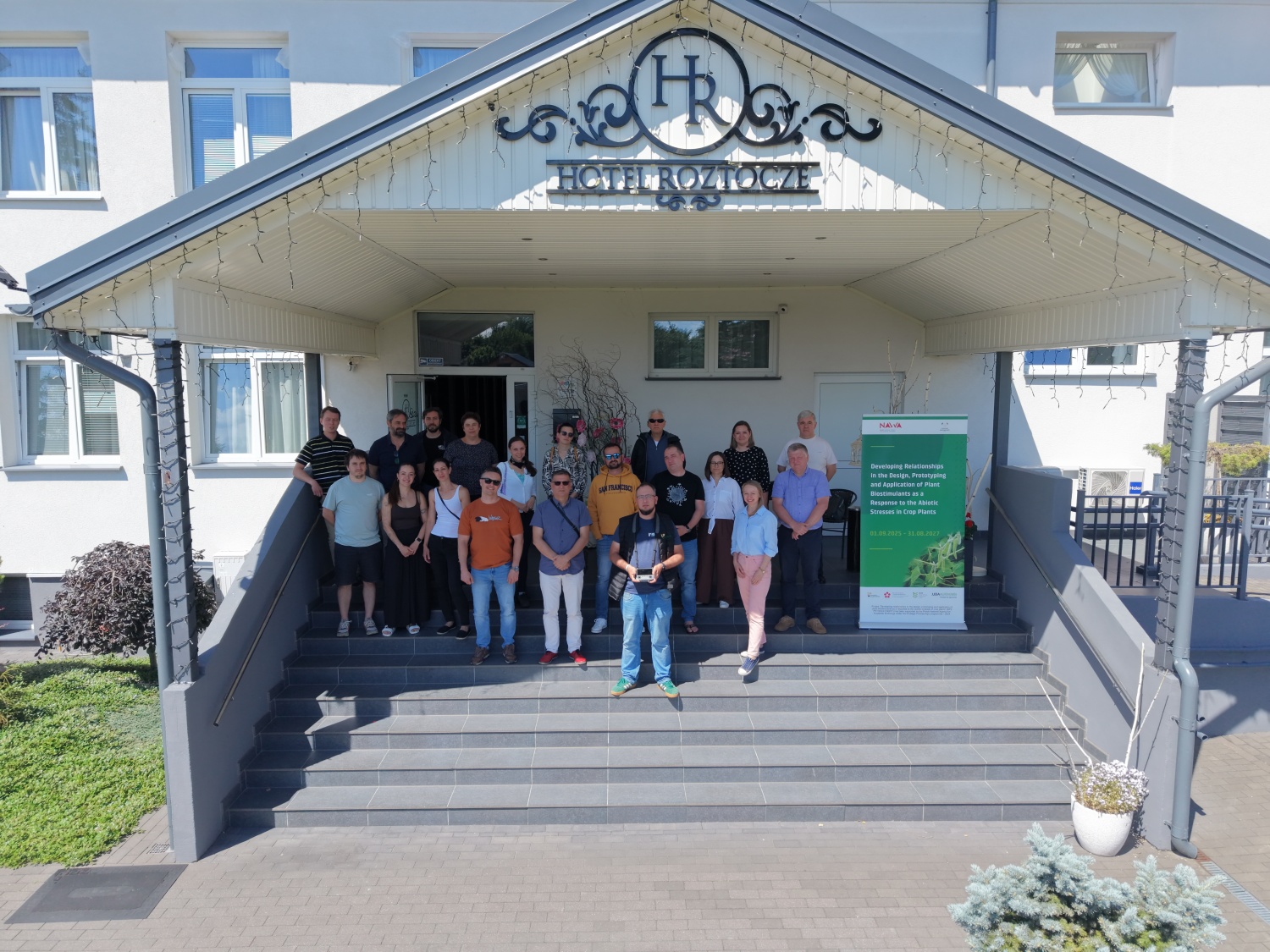
The meeting in Zwierzyniec was organised as part of Task 1, “Development and strengthening of relations between the Partners and identification of new areas of cooperation.” One of the main objectives of this task is to develop existing forms of cooperation and establish new ones between scientists representing different scientific disciplines, as well as to identify common directions for scientific, training and teaching activities. An important outcome of the meeting was also the development of directions for cooperation extending beyond the implementation period of the current project.
The meeting was attended by 20 scientists from Poland, the Czech Republic, Slovakia and Argentina, representing the Beneficiary and the Project Partners: Sebastian Asurmendi, Jan Bedrníček, Marcelo Carmona, Andrea Bohatá, Sławomir Kocira, Milan Koszel, Anna Krawczuk, Jana Lencová, František Lorenc, Jacek Ogrodniczek, Sylwia Okoń, Stanisław Parafiniuk, Kristýna Perná, Miroslav Pristavka, Artur Przywara, Francisco Sautua, Veronika Schiesslová, Magdalena Sozoniuk, Adéla Stupková and Michał Świeca.
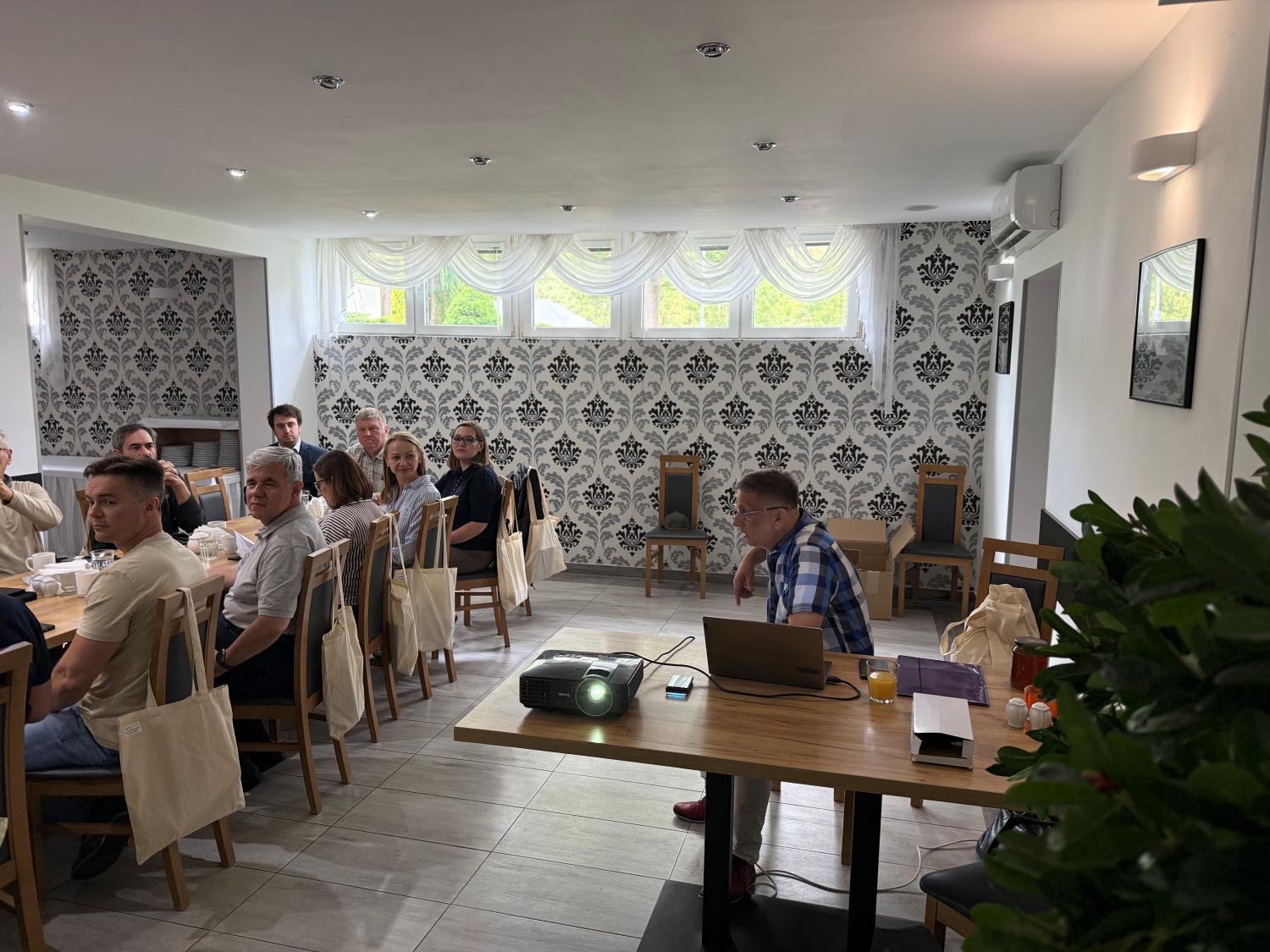
The interdisciplinary nature of the team was of particular importance for achieving the project objectives. The project brings together the knowledge and experience of scientists working in areas including agriculture and horticulture, food technology and nutrition, as well as engineering and technical sciences. This cooperation is intended to support the development of research on the design, production and application of plant biostimulants, their physical and chemical properties, and their effects on plants exposed to abiotic stresses. At the same time, the project contributes to the development of sustainable agriculture and scientific cooperation in line with the “Farm to Fork” approach.
On the first day of the meeting, following the welcome of the participants, discussions began on the main assumptions of the cooperation strategy to be implemented after the completion of the project. Over the following days, the scientists worked on individual elements of the document during both joint sessions and project group meetings. Particular attention was devoted to defining future directions of scientific cooperation, opportunities for conducting joint research, preparing publications and international projects, as well as further developing training and teaching cooperation.
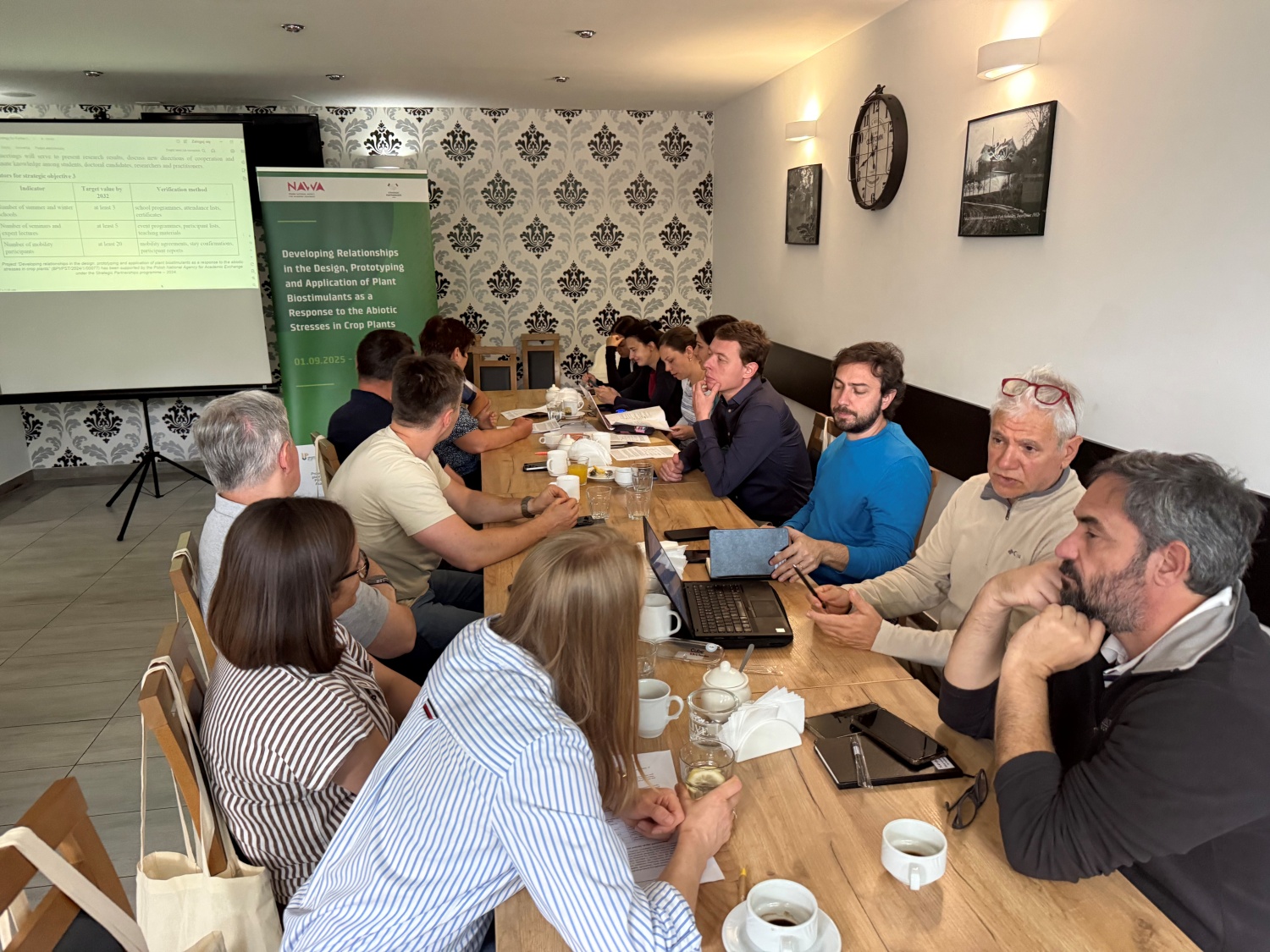
The discussions held during the meeting also enabled the participants to exchange experiences related to the implementation of individual project tasks and to identify new areas in which the expertise of scientists from the four cooperating universities could complement one another. Of particular importance was the creation of a basis for continuing cooperation after the end of project funding, including further joint research, preparation of scientific publications, organisation of scientific and educational events, and efforts to obtain funding for future international initiatives.
On the final day, the participants jointly edited the document developed during the meeting and summarised the meeting and adopted the cooperation strategy for the period following the completion of the project. The document is intended to support the sustainability of the partnership and the further development of mutual relations in the scientific, training and teaching fields. The project assumes that the development of long-term relationships between scientists representing the Beneficiary and the Partners will be one of the key outcomes of the cooperation.
The meeting in Zwierzyniec also provided an opportunity for direct integration of the international team. During their free time, the participants took part in a kayaking trip on the Wieprz River along the Obrocz–Zwierzyniec route, ending at the Rudka Reservoir, as well as in an excursion to Roztocze National Park, where they had the opportunity to discover the natural attractions of the Roztocze region. The participants also visited the Zwierzyniec Brewery, one of the most distinctive sites associated with the history and traditions of the town.
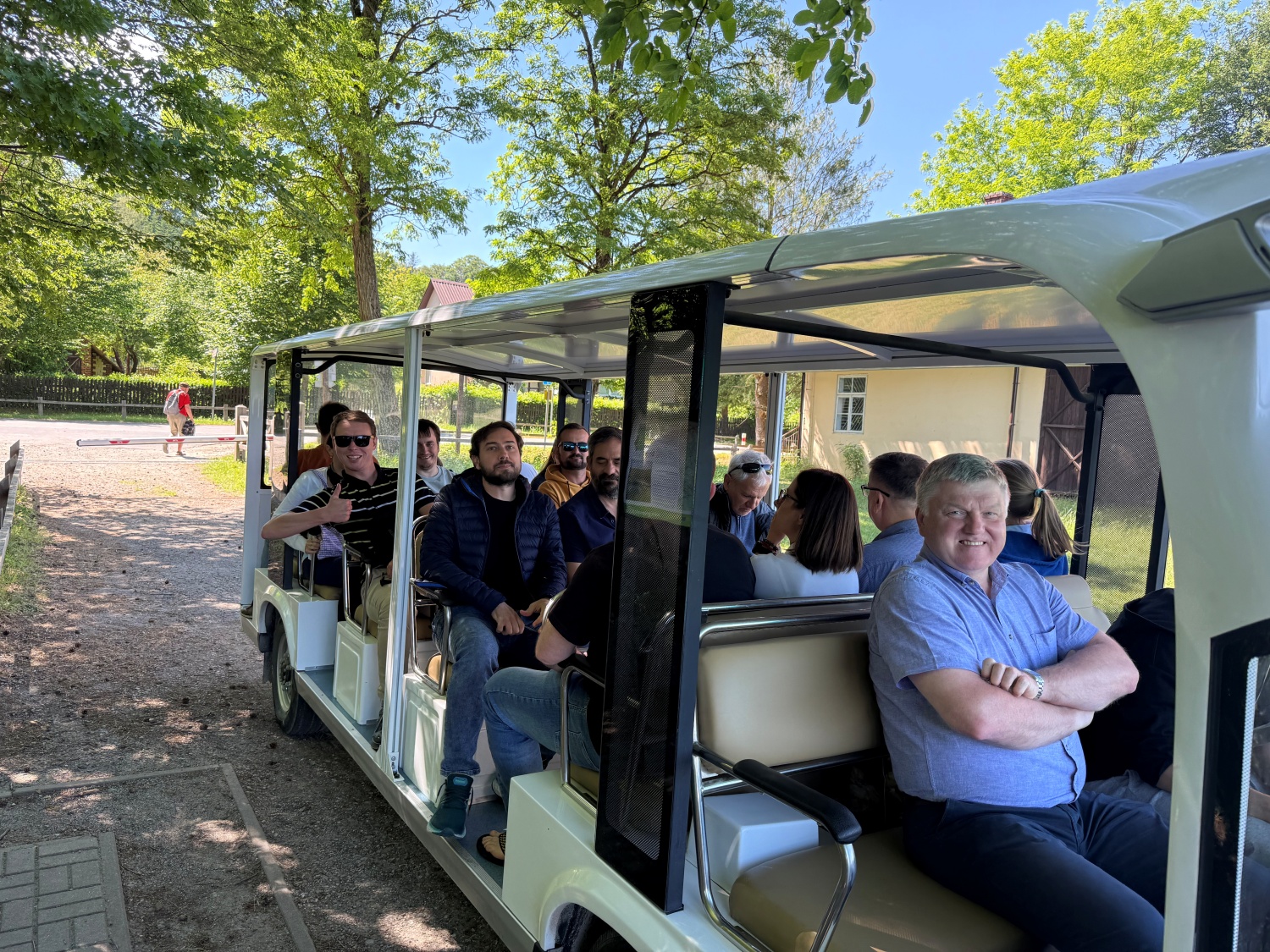
The several-day meeting created an opportunity both for intensive substantive work and for direct discussions between scientists representing different areas of expertise and academic institutions. The arrangements developed during the meeting will provide a basis for further strengthening the partnership between the University of Life Sciences in Lublin and the partner universities from the Czech Republic, Slovakia and Argentina, as well as for developing joint research initiatives addressing contemporary challenges in agriculture, particularly those related to climate change, abiotic stress in plants, and the need to apply sustainable production technologies.


13 Akademicka Street, 20-950 Lublin
VATIN 712 010 37 75
REGON no. 000001896
ePUAP: /UP-Lublin/SkrytkaESP